
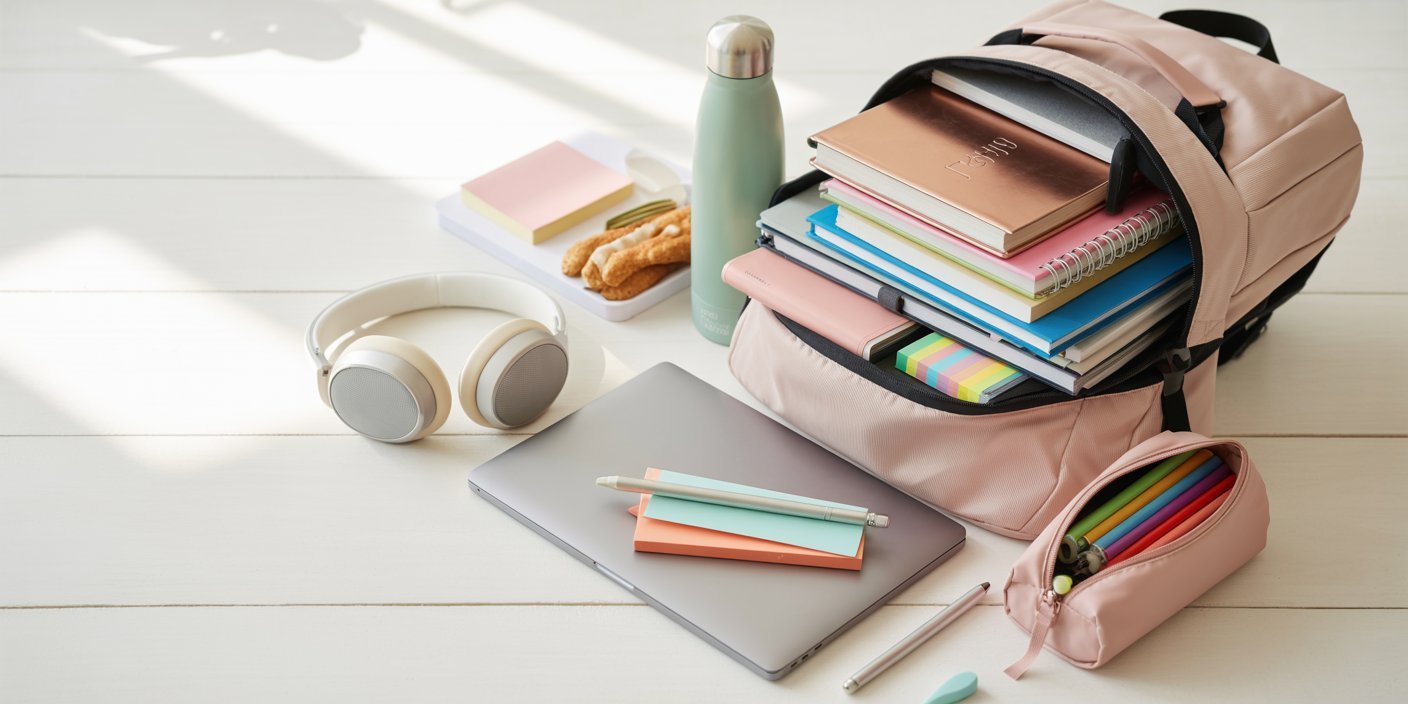
What’s in my backpack? Hi guys, welcome back—or welcome for the first time—to my blog.
My name is Emily Ben, and today’s post is all about how to prepare for a new school year and how to start the school year strong.
I’ll be sharing some back-to-school shopping essentials, walking you through exactly what I keep in my backpack and pencil case, and giving you practical student advice, tips, and tricks that have genuinely helped me over the years.
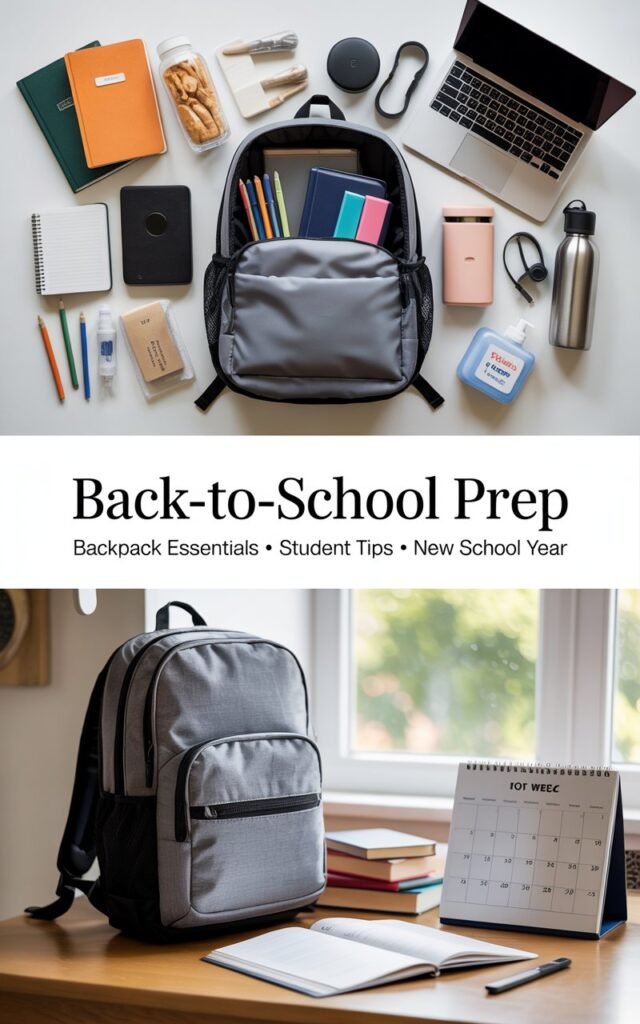
Whether you’re heading into high school or university, preparing ahead of time can make a huge difference in how confident and organized you feel when classes start.
Let’s get into everything you need to know.
Back-to-School Shopping Essentials
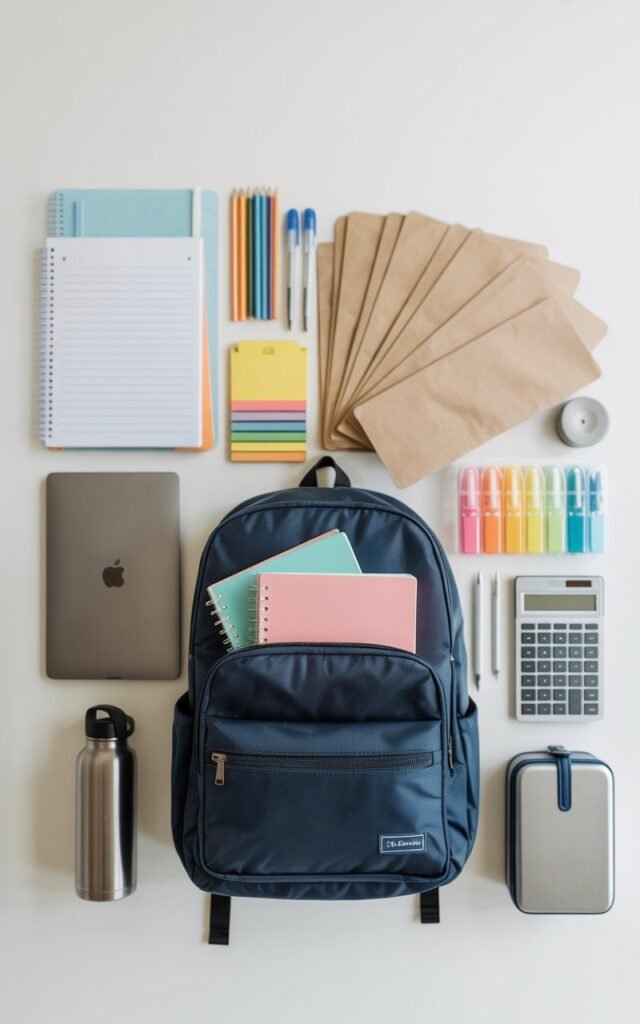
When it comes to school supplies, I love keeping things simple, functional, and aesthetically pleasing.
One of the first things I picked up were some really cute pastel pink sticky notes.
They’re apparently better for the environment and only cost about $3, so that felt like a win.
I’m also a huge fan of pastel highlighters and mild liners. You can buy full sets on Amazon, but if you’re like me and only love certain colors, it makes more sense to buy individual ones.
My personal favorites are light blues, although they were sold out when I was shopping.
Notebooks vs. Binders: What Actually Works
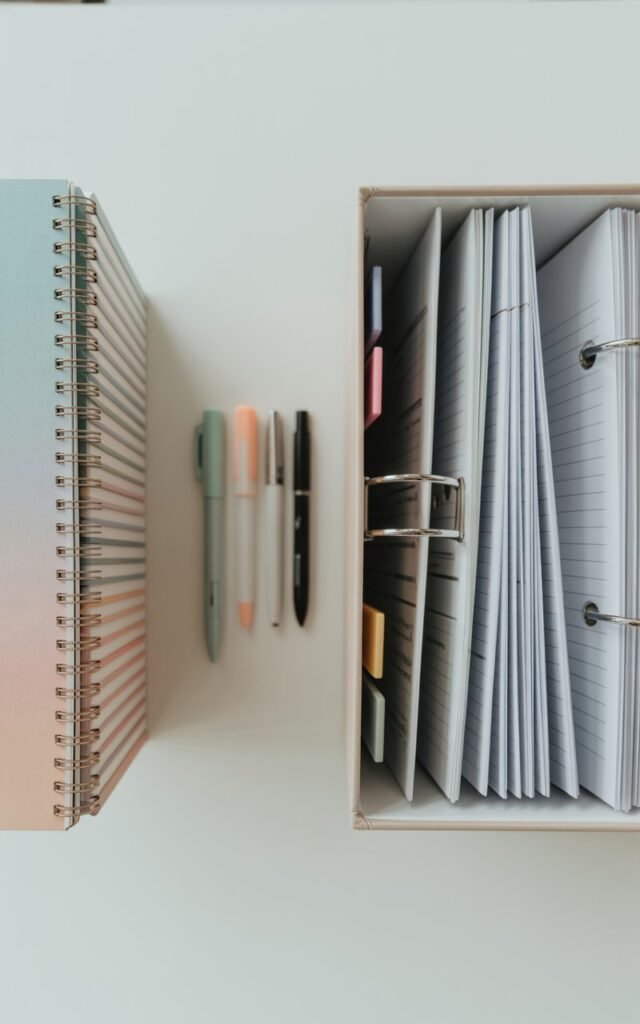
If you don’t have an iPad like me, physical notebooks are still an absolute must.
I usually buy notebooks from Five Star, though I’ve used cheaper brands like Hilroy in the past.
I don’t really care about paper thickness, but I do care about color coding.
For me, subjects always had specific colors.
Math was always red, chemistry was always blue, and biology was always green.
Those are, in my opinion, the only correct colors. For electives or literature-based classes, I usually just kept loose paper in a binder.
I’ve never been a fan of having one binder per subject. It’s way too heavy, especially once you add textbooks.
I prefer having one main binder with color dividers and separate notebooks for each subject.
Notebooks with around 100 to 200 pages are usually enough for a semester, which is about four months.
Although I’m planning to eventually transition into being a fully digital student, I haven’t pulled the trigger on buying an iPad yet.
So for now, physical notebooks are still my go-to.
Writing Tools You Actually Need
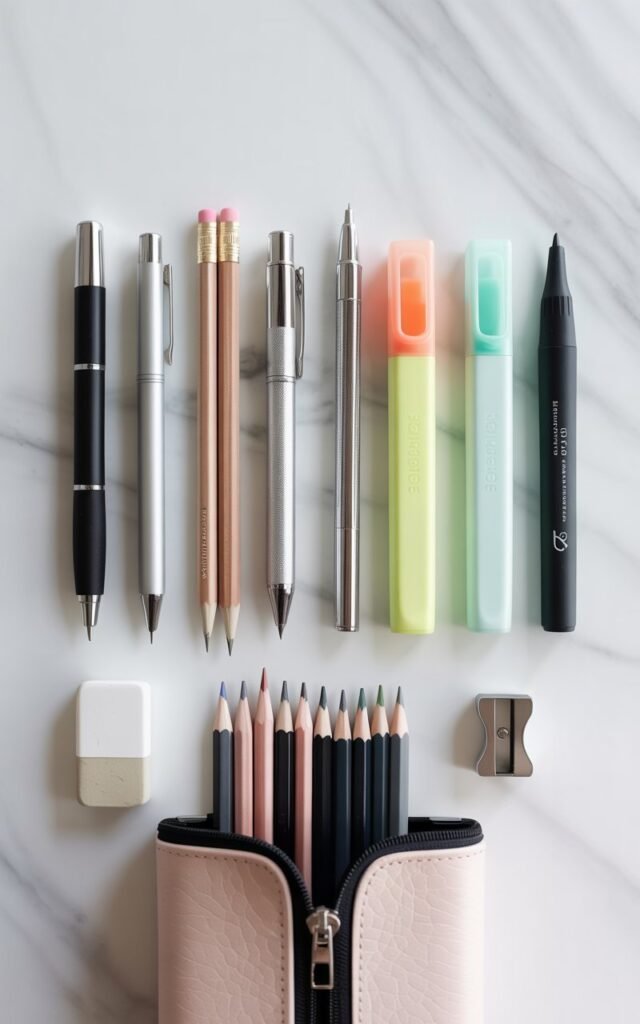
One school supply people often forget about is wooden pencils.
These are essential for exams that use Scantrons or bubble sheets, which usually require graphite pencils.
You don’t need a huge pack—just one or two will do if you already have some at home.
I also like mechanical pencils, especially 0.5 mm ones, but I’ve noticed that when I buy large packs, I tend to lose them more easily. I usually stick to owning just one or two.
Color pens are another must-have. I always look for pens that include black, blue, and red.
They’re practical and cover almost every situation.
What’s in My Backpack: A Detailed Breakdown
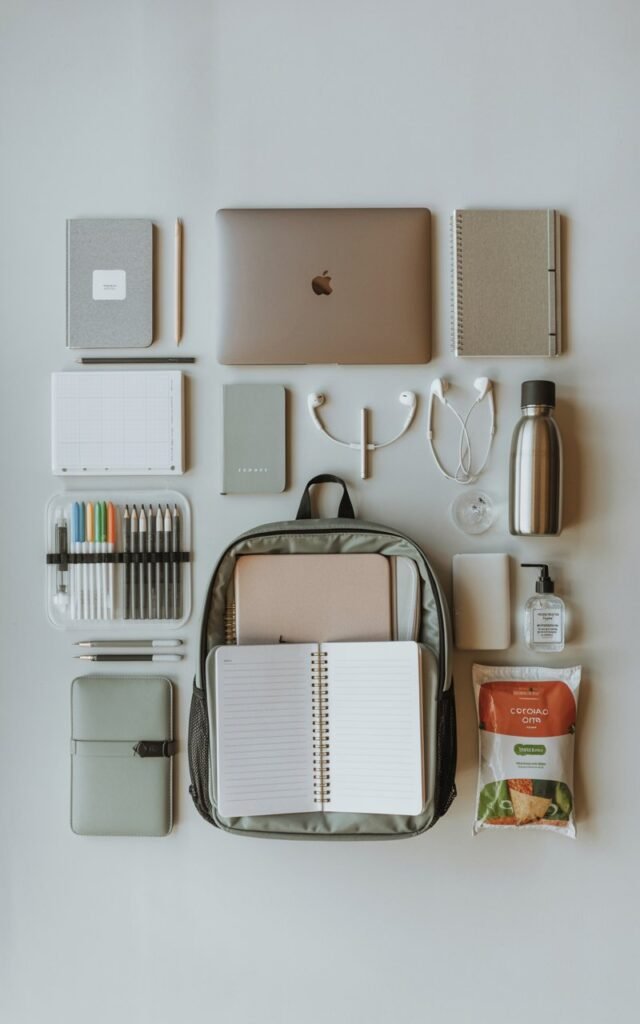
Once I got home, I laid everything out to show exactly what I keep in my backpack.
Back in high school, I used a Kånken backpack. T
ote bags aren’t very realistic for school, especially when you’re carrying heavy textbooks, because the weight sits unevenly on one shoulder.
Inside my backpack, the first thing you’ll find is one large binder for loose papers from all my classes, organized with color dividers.
Alongside that, I carry my color-coded notebooks.
In the back compartment, I always keep my laptop. In my experience, a laptop is a student essential.
While many students now use tablets or iPads, I still prefer a traditional laptop because of the bigger screen and ease of typing.
Laptop Recommendation for Students
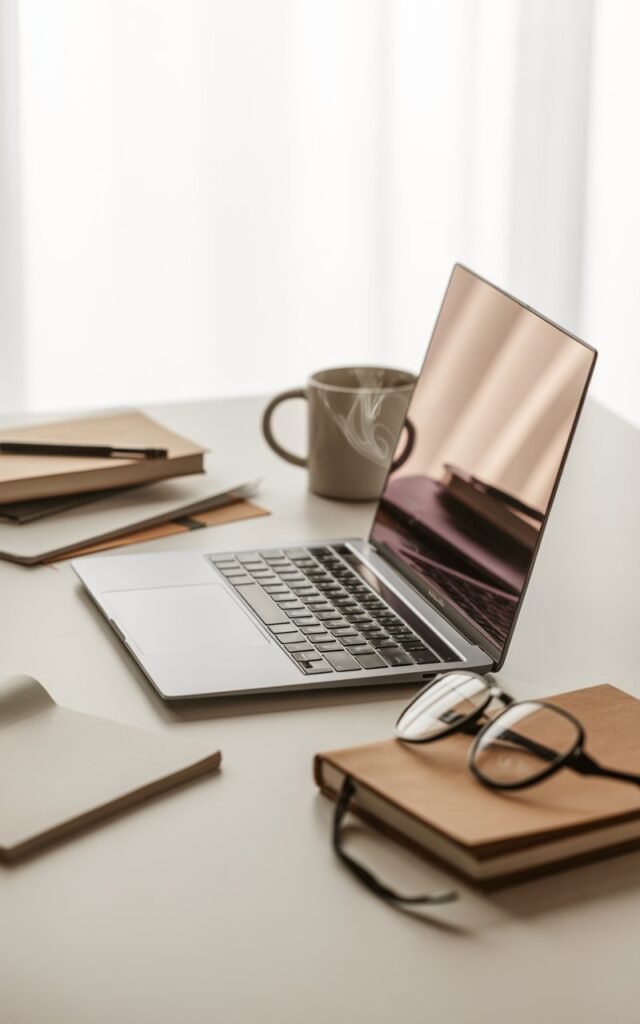
If you’re in the market for a new laptop, I highly recommend the Gigabyte G5.
It’s a great balance between productivity and leisure because it also works as a gaming laptop.
It has a 15.6-inch screen, which makes multitasking easy, especially when splitting the screen between multiple windows.
It runs on an 11th-generation Intel processor and a GeForce RTX 30 series GPU, which is great for video rendering, schoolwork, and gaming.
I’ve traveled with this laptop to Korea and Australia and used it to run multiple applications at once, including Notion, web browsers, Word, Excel, and video editing software.
It also has a 144Hz refresh rate, which is better than the monitor I currently use, and I love the clean aesthetic and RGB keyboard. Despite its size, it fits perfectly into my Kånken backpack.
Pencil Case and Daily Essentials
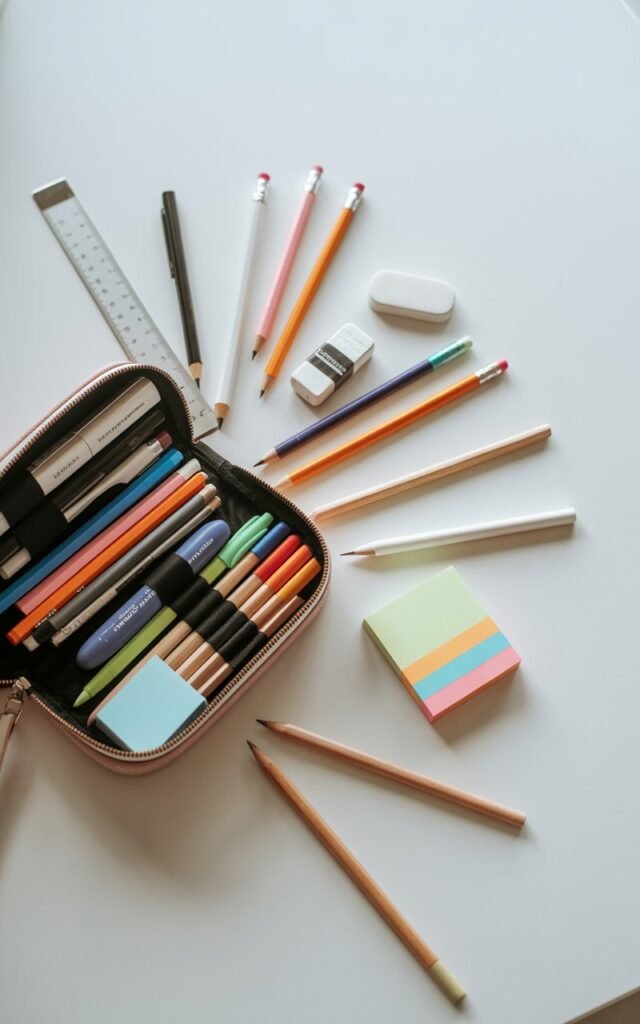
The next things I keep in my backpack are my pencil case and calculator.
My calculator was actually provided by my school, and I recommend waiting before buying one because some classes require specific models.
Inside my pencil case, I keep tape, white-out, three highlighters, multiple pens, and two types of pencils.
For exams, I always carry HB2 pencils.
I also have one emoji pencil that was surprisingly expensive, but I’ve never lost it, and one affordable scribble pen that I use for scratch notes.
Emergency Pouch and Personal Items
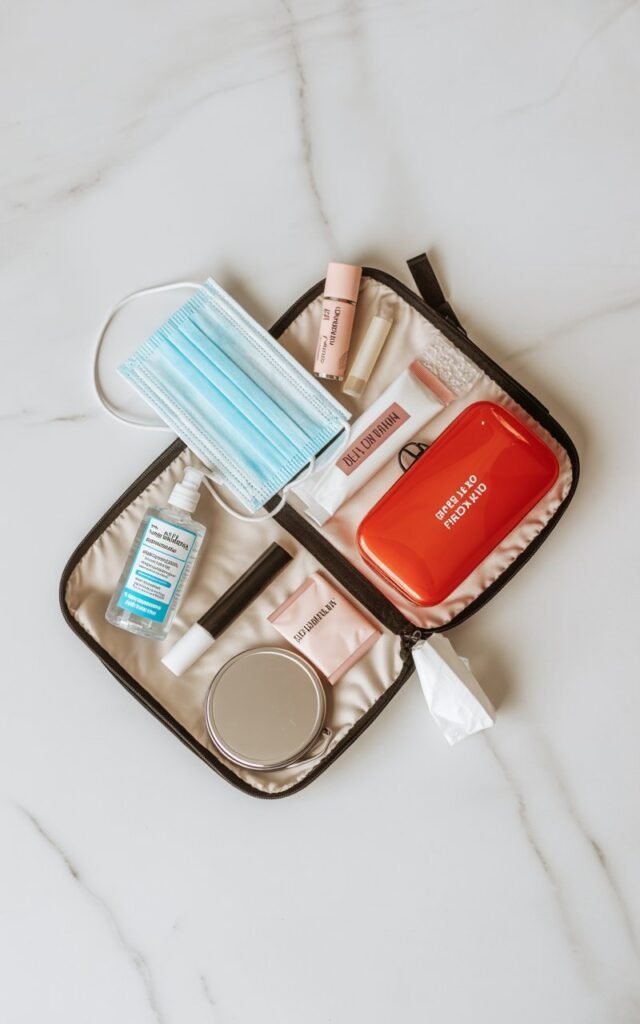
Another essential in my backpack is an emergency pouch.
This usually includes two pads, two tampons, a mini hairbrush, deodorant, and a small perfume.
I also carry spare hair ties and a mini lip balm because I hate having chapped lips.
I always keep my wallet with me, especially if I need my debit card or bus card, and of course, my water bottle to stay hydrated throughout the day.
The only thing I usually forget is hand sanitizer, which I normally keep in my purse.
Tip 1: Fix Your Sleep Schedule
One of the most important pieces of advice I can give is to fix your sleep schedule.
This is something my mom made me prioritize when I was younger, and I wish I had taken it more seriously in high school.
Getting seven to eight hours of sleep is crucial for physical, mental, and emotional health.
Sleep also has a huge impact on productivity.
Studying while sleep-deprived is counterproductive because the information doesn’t stick. Cramming only makes things harder when midterms and finals come around.
I always try to start sleeping earlier and waking up earlier at least a week before school starts.
If you’re not a morning person like me, this makes the adjustment much easier.
Tip 2: Create a Simple Morning Routine
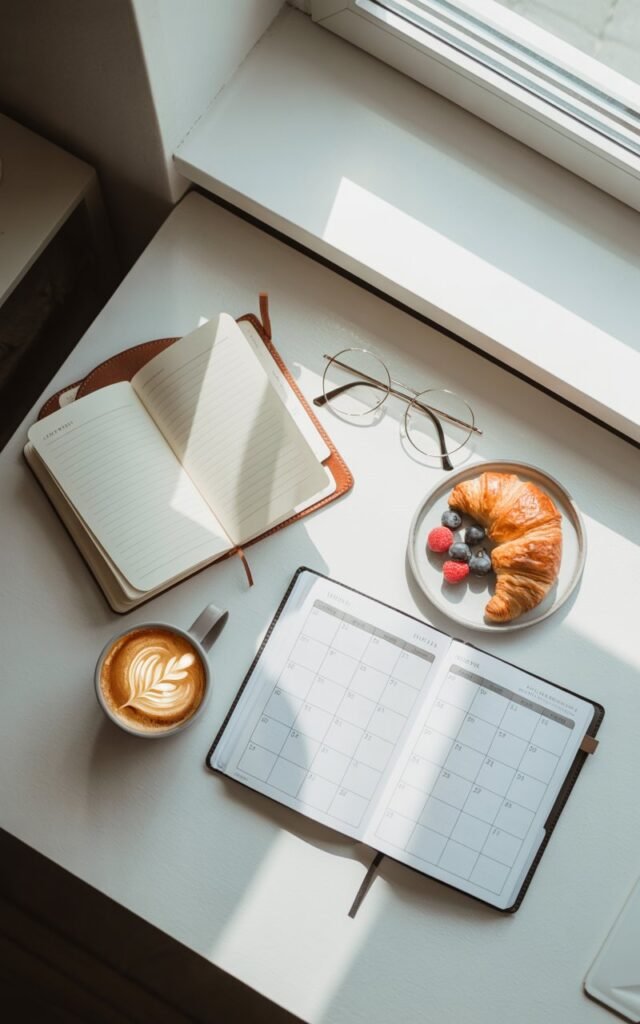
Having an overly complicated morning routine isn’t realistic for students.
Most of us hit snooze and rush out the door. Instead, I focus on a few small but important steps.
My morning routine includes washing my face and doing skincare with sunscreen, brushing my teeth, checking my bag to make sure everything is packed, eating a proper breakfast like toast with peanut butter and fruit, and taking my multivitamins.
If I didn’t pack lunch the night before, I do that in the morning, along with grabbing snacks, water, or cash for the cafeteria.
This routine worked for me in high school, but you can always adjust it to fit your priorities.
Tip 3: Find an Organization System That Works for You
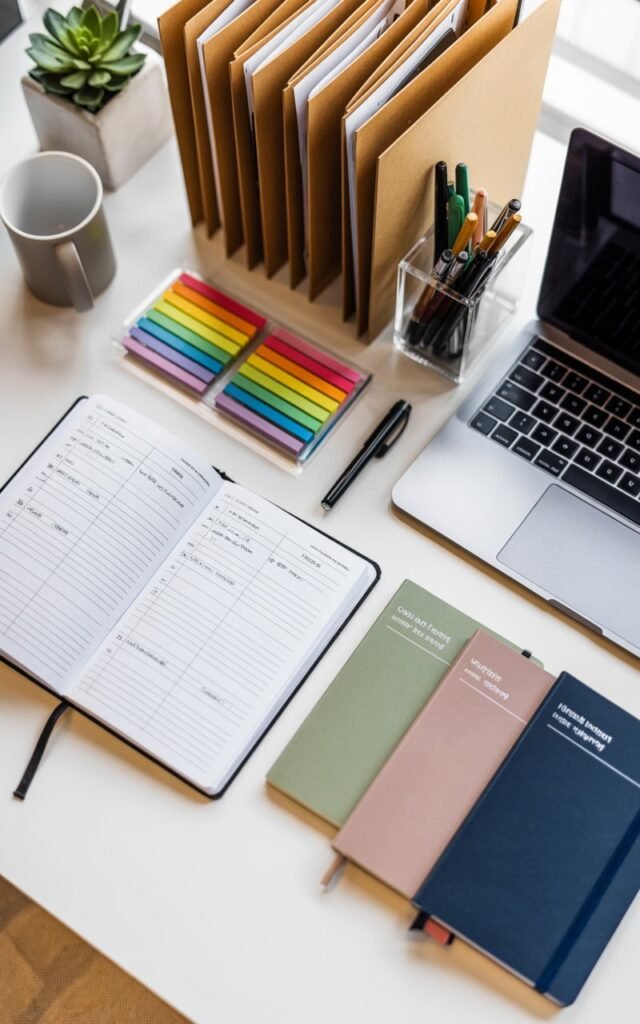
Organization is one of the most important skills a student can have.
I personally use a combination of apps and physical tools.
I love using Notion and create new templates almost every semester.
In my old setup, I had a calendar for assignments and exams, a master to-do list, and a grade calculator to track weighted grades.
I also use digital calendars that sync with my email, but I still rely on old-school tools like sticky notes and notepads.
I stick Post-it notes directly onto my monitor so I can’t ignore them, and I use notepads to jot down ideas without breaking focus.
Students juggle classes, extracurriculars, jobs, and personal lives, so having a system that keeps everything organized is essential.
Starting this early can make a huge difference in your success.
Tip 4: Eliminate Distractions
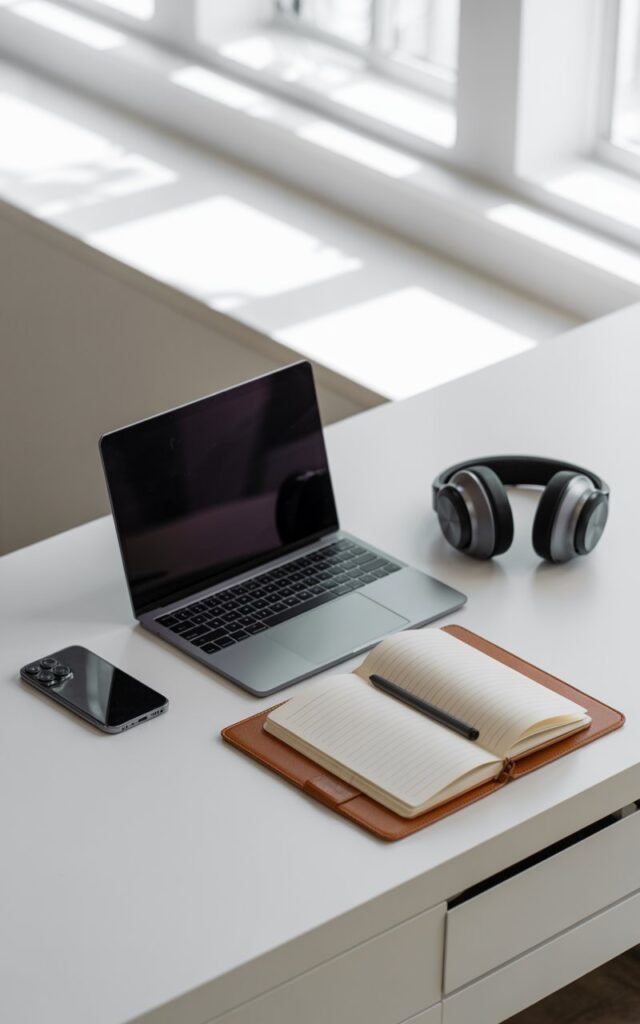
One of the biggest distractions for students is their phone, especially social media. Improving self-discipline is important, and there are simple ways to make it easier.
I use different Do Not Disturb modes on my phone.
I have a focus mode for studying that only allows messages from my parents and siblings.
I have a stricter silent mode for exam season that blocks everything, and a general Do Not Disturb mode that allows friends and family but no apps.
Using different levels of notification control really helps with focus.
While the ideal situation is not getting distracted at all, that takes practice.
Eliminating distractions one by one is a great place to start.
Clutter can also be distracting, so I try to keep my workspace clean.
If studying at home makes you want to nap, going to a library—especially a silent floor or cubicle-style space—can help.
While some people like ambient noise, it can be distracting if you’re easily pulled into other conversations.
Final Thoughts on Preparing for the New School Year
Those are my key tips on how to prepare for a new school year, along with everything I keep in my backpack to stay organized and ready.
Thank you so much for reading, and I hope this post helps you feel more confident and prepared for the upcoming school year.
I hope you have an amazing back-to-school season, and I’ll see you next time.
